Wine Country Trends 2026: what wine lovers wanted this summer.
Ninety days of discovery across 767 wineries, condensed into the numbers a tasting room can act on before harvest weekends fill up. This is what your next guest looks like.
By Oxto · Published September 14, 2026 · 9 min read
The Oxto Q3 2026 Winery Report is a first-party look at how wine lovers discovered and booked wineries over 90 days, from June 16 to September 14, 2026. It draws on more than 8,600 winery profile views across 767 wineries and a community of over 14,000 people, and it reports the regions, guests, grapes, prices, and search behavior that drew the most attention this summer.
It answers a plain question for anyone who runs or markets a tasting room: what did the 2026 wine country visitor actually want, and how did they decide where to go? Every figure below is Oxto’s own platform data, aggregated so no individual guest is identified, and each one is shown here both as a chart or heat map and as a data table.
The backdrop is a broader shift in how people go out. According to OpenTable’s 2026 Dining Trends Report, bookings tied to experiences rose 46 percent year over year, as diners increasingly want an occasion rather than just a table. Oxto’s data shows the same pull inside wine country: younger guests, traveling from farther away, planning ahead for a specific kind of visit.
What are the biggest wine country trends in 2026?
Six patterns defined the summer of 2026 in wine country, and each one is measurable in how guests searched, chose, and booked:
- Demand concentrates in a few regions. Napa Valley drew 36 percent of winery profile opens and the Russian River Valley 20 percent, so the two most-searched regions together took the majority of all attention.
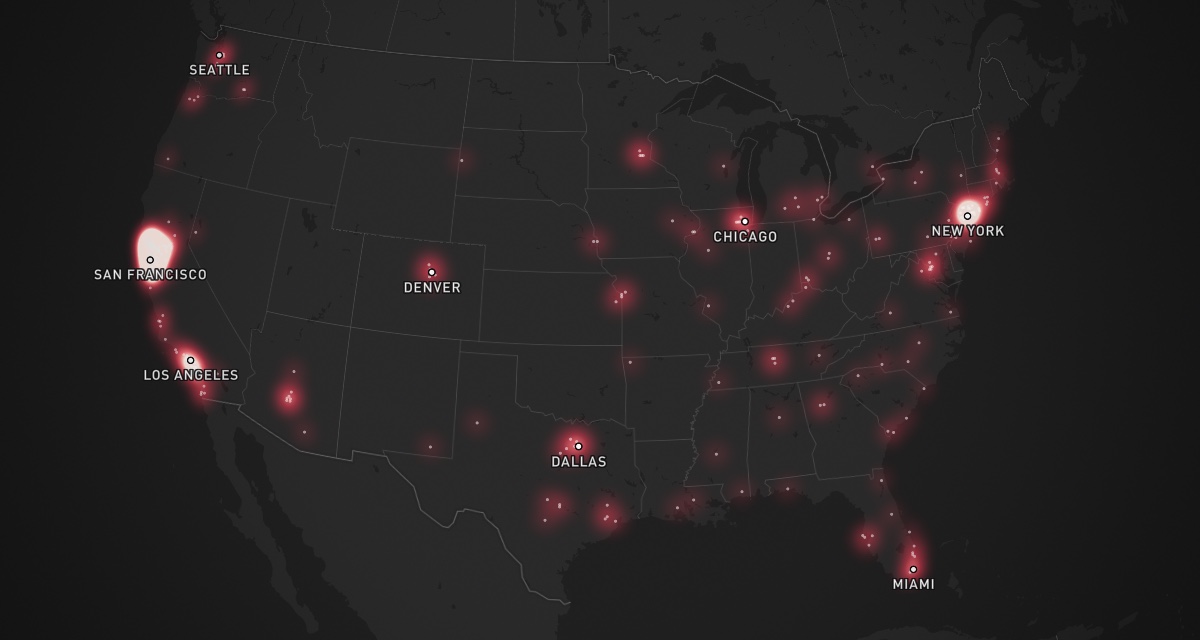
- The visitor is getting younger and traveling farther. 64 percent of users are 25 to 44, and 55 percent of summer signups live outside California.
- Sparkling wine is the fastest riser. Among new signups, Champagne and Rosé each climbed 7 points to 46 percent, passing Chardonnay, and more than half of all users list at least one sparkling wine.
- Guests are less price-sensitive than the tasting menu suggests. The median stated bottle ceiling is 125 dollars and the median comfortable tasting fee is 50 dollars.
- People search by name and place, not by grape. 72 percent of searches are a winery name and 20 percent a town or region, while only 2 percent are a grape.
- The elevated, reservation-first experience wins the click. Verified, appointment-style profiles were opened far more often than walk-in bar tastings.
Which wine regions had the most visitor demand in 2026, Napa or Sonoma?
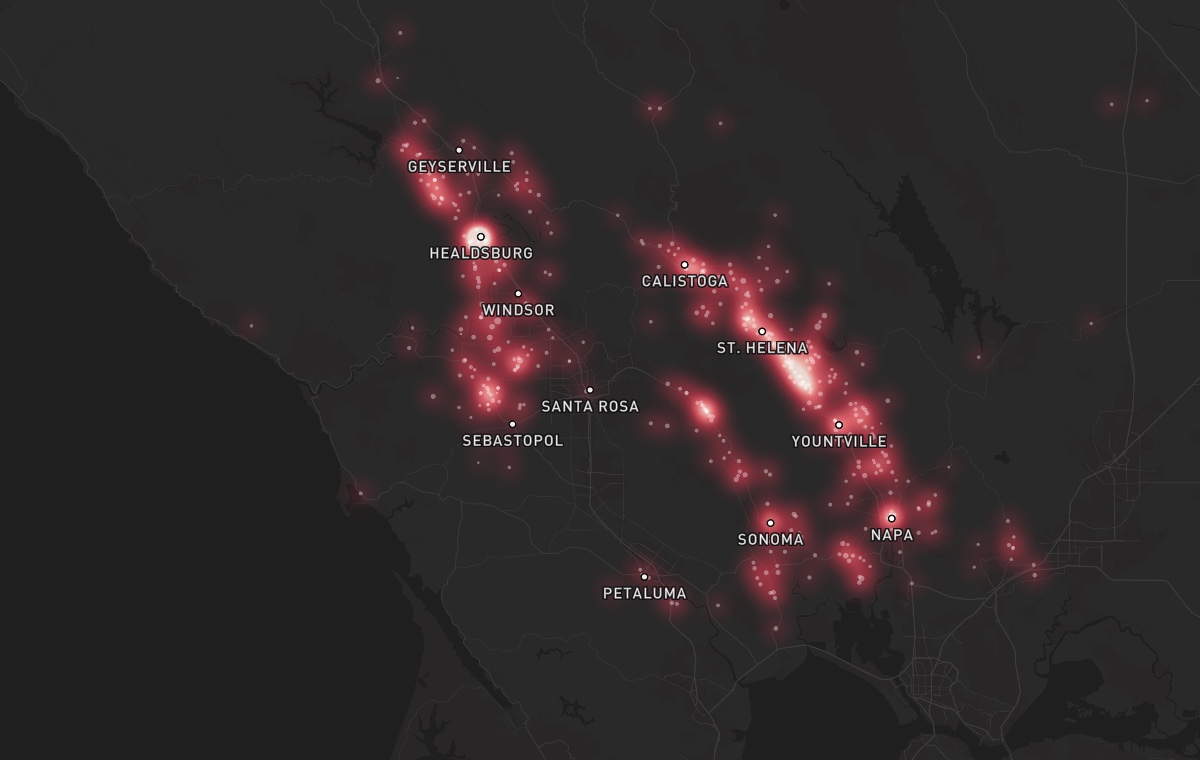
Napa Valley led every other region in 2026, taking 36 percent of all winery profile opens. The Russian River Valley in Sonoma County was second at 20 percent, and Sonoma Valley third at 10 percent. Here is the full share of winery profile opens by region:
| Wine region | Share of winery profile opens |
|---|---|
| Napa Valley | 36% |
| Russian River Valley | 20% |
| Sonoma Valley | 10% |
| Paso Robles | 5% |
| Dry Creek Valley | 5% |
| Livermore Valley | 4% |
The Napa versus Sonoma question does not have one clean answer. Napa Valley is the single most-searched name, but Sonoma County’s appellations, led by the Russian River Valley, together draw a comparable share of demand. And the busiest regions are not always the easiest place to be found. Smaller areas such as Windsor, Carneros, and the Petaluma Gap drew more views per winery, because fewer wineries competed for the same attention. A winery in a quieter appellation often has a better chance of standing out.
For a visitor’s guide to each, see Napa Valley wine tasting and Sonoma wine tasting.
Who is the 2026 wine country visitor?
The wine country visitor in 2026 skews young, experienced, and out of state. 64 percent of Oxto users are 25 to 44, the Gen Z and Millennial core, and around six in ten of the newest users are under 35. 70 percent describe themselves as intermediate or advanced drinkers rather than first-timers. And 55 percent of summer signups live outside California, which means they are traveling in and tend to book ahead.
are 25 to 44, the Gen Z and Millennial core. Six in ten of the newest are under 35.
are intermediate or advanced drinkers, not first-timers.
of summer signups live outside California. They are travelers, and they book ahead.
is the median request. 67 percent are parties of 3 to 6.
take 56 percent of requested dates. Saturday leads, Thursday is a close second.
is the peak start time. 69 percent of requests fall between 10 am and 3 pm.
| What guests request | The 2026 pattern |
|---|---|
| Party size | Median party of 4; 67 percent are parties of 3 to 6 |
| Day of week | Thursday to Saturday take 56 percent of requested dates; Saturday leads |
| Start time | 1 to 2 pm is the peak; 69 percent fall between 10 am and 3 pm |
| Research day | Monday is the busiest planning day, with peaks at 9 am and 2 pm |
When those guests request a visit through an Oxto booking widget on a winery’s own website, a clear pattern emerges in what they ask for:
The practical read: a tasting room that wants more of these guests should hold small-group availability from early afternoon Thursday through Saturday, and make sure its profile and calendar look their best on a Monday, when the most planning happens.
Which wines are in demand in 2026?
Cabernet Sauvignon and Pinot Noir are effectively tied at the top of what wine lovers say they enjoy, and sparkling wine is climbing fastest. These are self-reported preferences set at signup, and guests can list more than one, so the shares below are not mutually exclusive:
| Wine | Share of wine lovers who list it |
|---|---|
| Cabernet Sauvignon | 66% |
| Pinot Noir | 65% |
| Sauvignon Blanc | 59% |
| Sparkling | 42% |
| Chardonnay | 41% |
| Rosé | 39% |
| Champagne | 39% |
| Zinfandel | 33% |
Among this summer’s new signups, Champagne and Rosé each climbed 7 points to 46 percent, passing Chardonnay, and more than half of all users now list at least one sparkling wine. Natural and orange wine is a real 12 percent niche, not a rounding error. A tasting flight that opens with something sparkling, and a profile that names it, is increasingly what younger guests are looking for.
How much will wine tasting guests pay in 2026?
Guests are less price-sensitive than a typical tasting menu assumes. The median stated ceiling is 125 dollars a bottle, and 53 percent say they will go past 100 dollars, while roughly a third will go past 200. On the tasting fee itself, the median comfortable amount is 50 dollars, half accept more than 50, and a third accept 100 dollars or more.
median stated ceiling per bottle. 53 percent will go past $100. Roughly a third will go past $200.
median comfortable fee. Half accept more than $50, and a third accept $100 or more.
| What guests will spend | Median | The tail |
|---|---|---|
| Bottle ceiling | $125 | 53 percent go past $100; about a third past $200 |
| Comfortable tasting fee | $50 | Half accept more than $50; a third accept $100 or more |
Attention follows price in a way that surprises many owners. Wineries listing a 75 to 99 dollar tasting are only 12 percent of the priced catalog, yet they drew 24 percent of the priced profile opens. Out-of-state visitors accept a higher fee than locals do, a median of 75 dollars versus 65, while California locals set the higher bottle ceiling at 200 dollars. A premium, well-described tasting is not a deterrent; it is a draw.
For a full breakdown of what tastings cost across regions, see how much wine tasting costs.
How do wine lovers find and choose a winery?
People arrive knowing a name or a place, not a grape. 72 percent of Oxto searches are for a specific winery name, 20 percent are a town or region, and only 2 percent are a grape variety. Geography is the first filter guests reach for, ahead of atmosphere, experience level, or price.
of searches are a winery name. 20 percent are a town or region. 2 percent are a grape.
want a scenic setting. 72 percent are planning a visit with friends.
of Discover taps go to two rows: Verified Picks and Based on Your Taste.
| How guests search and choose | Share |
|---|---|
| Search by winery name | 72% |
| Search by town or region | 20% |
| Search by grape variety | 2% |
| Want a scenic setting | 85% |
| Planning a visit with friends | 72% |
| Discover taps to the two taste-matched rows | 77% |
The searches that most often go unanswered are the natural-language ones: a dog-friendly patio in Sonoma Valley, old-vine Zinfandel in Dry Creek Valley. If a winery’s profile actually says those things, it becomes the answer to a question no one else is answering. The clearest lesson for how wineries get discovered in 2026 is that a complete, specific, reservation-ready profile beats a thin listing, because both search and AI-assisted discovery reward detail.
Do Oxto Verified profiles get more visits?
Yes, and by a wide margin. Oxto Verified profiles are about 2 percent of listings but took 13 percent of all discovery this summer, and were opened roughly 7 times as often as the rest of the catalog. Among the 100 most-opened profiles, luxury settings, wine caves, and appointment-only tastings appear nearly twice as often as they do across the full catalog, while walk-in and bar-counter tastings appear about half as often.
How much more often a Verified profile was opened than the rest of the catalog.
Verified profiles are 2 percent of listings. They took 13 percent of all discovery.
- 1Domaine de la RivièreWindsor, Russian River ValleyOxto Verified ✓
- 2Aonair Winery and CavesSt. Helena, Napa ValleyOxto Verified ✓
- 3Hook and LadderSanta Rosa, Russian River ValleyOxto Verified ✓
- 4Centennial MountainHealdsburg, Russian River ValleyOxto Verified ✓
- 5Reverie Winery EstateSt. Helena, Napa ValleyOxto Verified ✓
| Rank | Winery | Location |
|---|---|---|
| 1 | Domaine de la Rivière | Windsor, Russian River Valley |
| 2 | Aonair Winery and Caves | St. Helena, Napa Valley |
| 3 | Hook and Ladder | Santa Rosa, Russian River Valley |
| 4 | Centennial Mountain | Healdsburg, Russian River Valley |
| 5 | Reverie Winery Estate | St. Helena, Napa Valley |
The five most-discovered Oxto Verified wineries this summer were:
Part of that gap is selection: wineries that verify their profile tend to be the ones already investing in the guest experience. But part of it is completeness. A verified profile carries confirmed hours, photos, a described tasting, and a working reservation path, which is exactly what the search behavior above rewards. Any winery, verified or not, can act on the same lesson and fill its profile in. For how the tools stack up, see the best winery reservation software.
Frequently asked questions
What are the biggest wine country trends in 2026?
In 2026, demand concentrated in a few regions (Napa Valley took 36 percent of winery profile opens and the Russian River Valley 20 percent), the visitor got younger and more out-of-state (64 percent are 25 to 44 and 55 percent live outside California), sparkling wine rose fastest, and guests searched by name and place rather than by grape.
Which is more in demand, Napa or Sonoma?
Napa Valley is the single most-searched wine region, taking 36 percent of winery profile opens in Oxto’s Q3 2026 data. Sonoma County is close behind once its appellations are combined: the Russian River Valley alone drew 20 percent and Sonoma Valley 10 percent. Napa leads on one name; Sonoma competes on breadth.
What does the average wine tasting guest want in 2026?
The 2026 wine country visitor is typically 25 to 44, an intermediate or advanced drinker, and often traveling from outside California. They request a party of about four, on a Thursday through Saturday afternoon, and want a scenic, reservation-ready experience. Most are planning the visit with friends.
How much do wine tasting guests expect to pay?
In Oxto’s Q3 2026 data the median stated bottle ceiling is 125 dollars, with 53 percent willing to go past 100 dollars, and the median comfortable tasting fee is 50 dollars, with a third accepting 100 dollars or more. Wineries listing a 75 to 99 dollar tasting drew a disproportionate share of attention.
Which wines are most popular in 2026?
Cabernet Sauvignon at 66 percent and Pinot Noir at 65 percent are effectively tied at the top of what wine lovers say they enjoy, followed by Sauvignon Blanc at 59 percent. Sparkling wine is the fastest riser: among new signups, Champagne and Rosé each climbed 7 points to 46 percent, and over half of users list at least one sparkling wine.
How do people search for wineries?
Most people search for wineries by name or place, not by grape. In Oxto’s 2026 data, 72 percent of searches are a specific winery name, 20 percent are a town or region, and only 2 percent are a grape variety. Natural-language searches, such as a dog-friendly patio in a named valley, most often go unanswered.
How do wineries get discovered online in 2026?
Wineries get discovered in 2026 through complete, specific, reservation-ready profiles. Guests and AI-assisted discovery both reward detail: confirmed hours, photos, a clearly described tasting, and a working booking path. Verified profiles on Oxto, about 2 percent of listings, took 13 percent of discovery and were opened roughly 7 times as often as the rest.
What is the Oxto Q3 2026 Winery Report?
It is Oxto’s first-party report on 90 days of winery discovery and booking, from June 16 to September 14, 2026, across 767 wineries and more than 14,000 users. It covers regional demand, visitor demographics, grape preferences, spending, and search behavior, all aggregated so no individual guest is identified.
See how your winery shows up to these guests.
Verified profiles were opened 7 times as often this summer. Try Oxto Verified free for 30 days, and cancel anytime before it renews.
Method. This report is built from Oxto platform activity between June 16 and September 14, 2026, a 90-day window across 767 wineries and more than 14,000 users. Wine preferences and spend ceilings are self-reported by guests at signup. Reservation patterns come from Oxto booking widgets embedded on wineries’ own websites. All figures are aggregate, and no individual guest is identified. The heat maps above show where demand and travelers concentrated over the same window.